
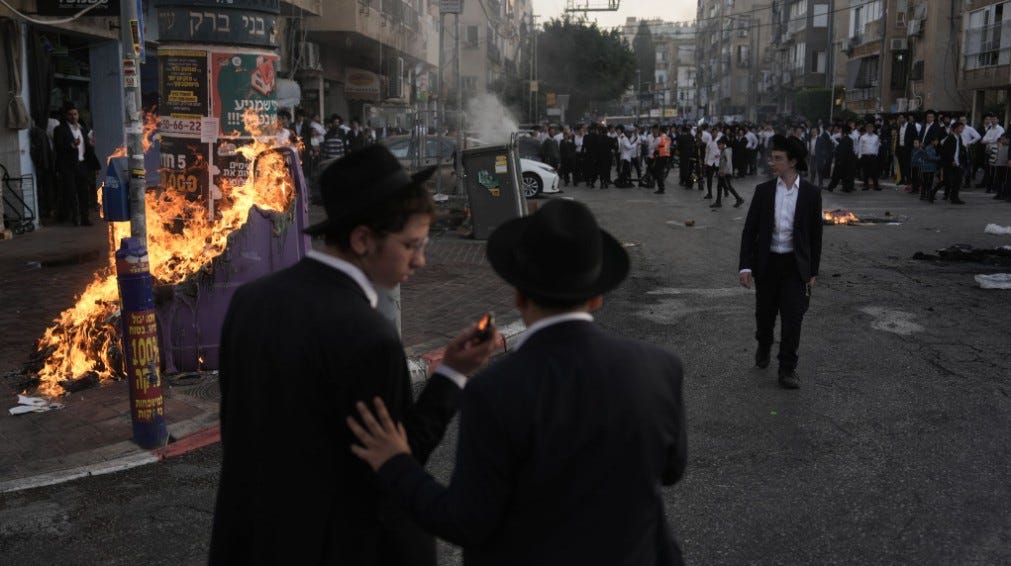
In the smoking streets of Bnei Brak on February 15, 2026, two female IDF instructors dressed modestly for a welfare visit to a soldier’s home hid in trash bins as a Haredi mob chased them. The crowd overturned a police car, set a motorcycle ablaze, hurled debris, and injured officers before police used stun grenades to rescue the women and arrest over 20 suspects. This outburst, sparked by draft tensions, scarred Israel’s unity. What would David, the man after Hashem’s own heart, say to those who turned Torah zeal into street fury?
David’s Vision of Unity Shattered
David wrote in Psalm 133:1, “Behold, how good and how pleasant it is for brethren to dwell together in unity!” He likened it to precious oil poured on Aaron’s head, flowing down to unite priest and people. Yet the Haredi extremists who hunted soldiers in black hats acted nothing like David’s psalms of peace. They behaved more like the divided tribes during Absalom’s rebellion, when brother turned against brother and the kingdom fractured from within. Their violence - torching motorcycles, hurling bins at guardians of the land - mimics the so-called Summer of Love riots in Portland and recent anti-ICE actions, where self-righteous mobs revealed deep hatred for righteous justice by attacking symbols of order and law enforcement.

Psalm 11:5 declares plainly: “The LORD examines the righteous, but the wicked and those who love violence, His soul hates.” This verse from David’s own words condemns not just the acts, but the heart that embraces violence as a tool, twisting zeal into destruction that weakens the nation. Internal strife makes Israel appear weak, inviting Hamas rockets and foreign scorn to strike harder. David would thunder: You wrap yourselves in Torah’s mantle, yet your rage mocks the unity that toppled Philistine giants. Repent, or become like the Amalekites you fear - those who attacked when Israel was vulnerable.
Torah’s Command to Pursue Peace
Leviticus 19:17 instructs, “You shall not hate your brother in your heart; you shall surely rebuke your neighbor, and not bear sin because of him.” David lived this command. He never raised his hand in rage against his own people, even fleeing Saul or grieving Absalom. In Psalm 34:14 he declares, “Depart from evil, and do good; seek peace, and pursue it.” The Bnei Brak rioters, inflamed against conscription they see as desecration, twisted this into pursuit of women in uniform. David would confront them: Did I spare lions only to let brothers wound each other? Your “defense” of Torah study endangers the nation it claims to protect, widening rifts amid Hamas terrorism, foreign pressures, division, and corruption.
Shaming the Memory of David
These acts shame David’s memory. He danced before the Ark to unite Levites and warriors, forging strength from scattered tribes. In 2 Samuel 23:3, his last words affirm righteous rule in the fear of God. Fear of God quells violence, not ignites it. The extremists’ fury turns sacred fire into fratricidal rage, handing enemies ammunition to mock Israel’s divisions. David, who healed fractures with song and sword only against true foes, would haul the perpetrators and their enablers forward: Your path betrays the shepherd-king who protected the flock, not scattered it.
Leadership Must Act Decisively
Prime Minister Netanyahu condemned the “serious and unacceptable” acts from an “extremist minority.” IDF Chief Eyal Zamir called it a severe red line crossed. Haredi voices, including Shas leader Arye Deri labeling it violence contrary to values and former Chief Rabbi Yitzhak Yosef urging expulsion of perpetrators, signal rejection. Yet fuller, unified shaming is essential. Public rebuke isolates the fringe, restores communal harmony, and strengthens sovereignty. Each generation arriving in Israel - through aliyah or birth - must guard against repeating the baseless hatred that felled the Second Temple, now masked as righteous protest against drafts or state symbols. The Sages in Yoma 9b identified sinat chinam as the root cause of that destruction; the Vilna Gaon later warned that such poison recurs in new forms if leaders fail to confront it. Haredi authorities bear the sacred duty to teach incoming olim and the young that true Torah binds hearts in chesed, not divides them in fury, ensuring every new wave builds unity instead of echoing past fractures.
Isaiah 2:4 promises nations beating swords into plowshares when peace prevails over discord. Haredi leaders must amplify David’s call now, confronting extremists publicly to mend the breach. Through such resolve, Israel advances toward full sovereignty, Torah-guided and undivided, barriers overcome by shared purpose.