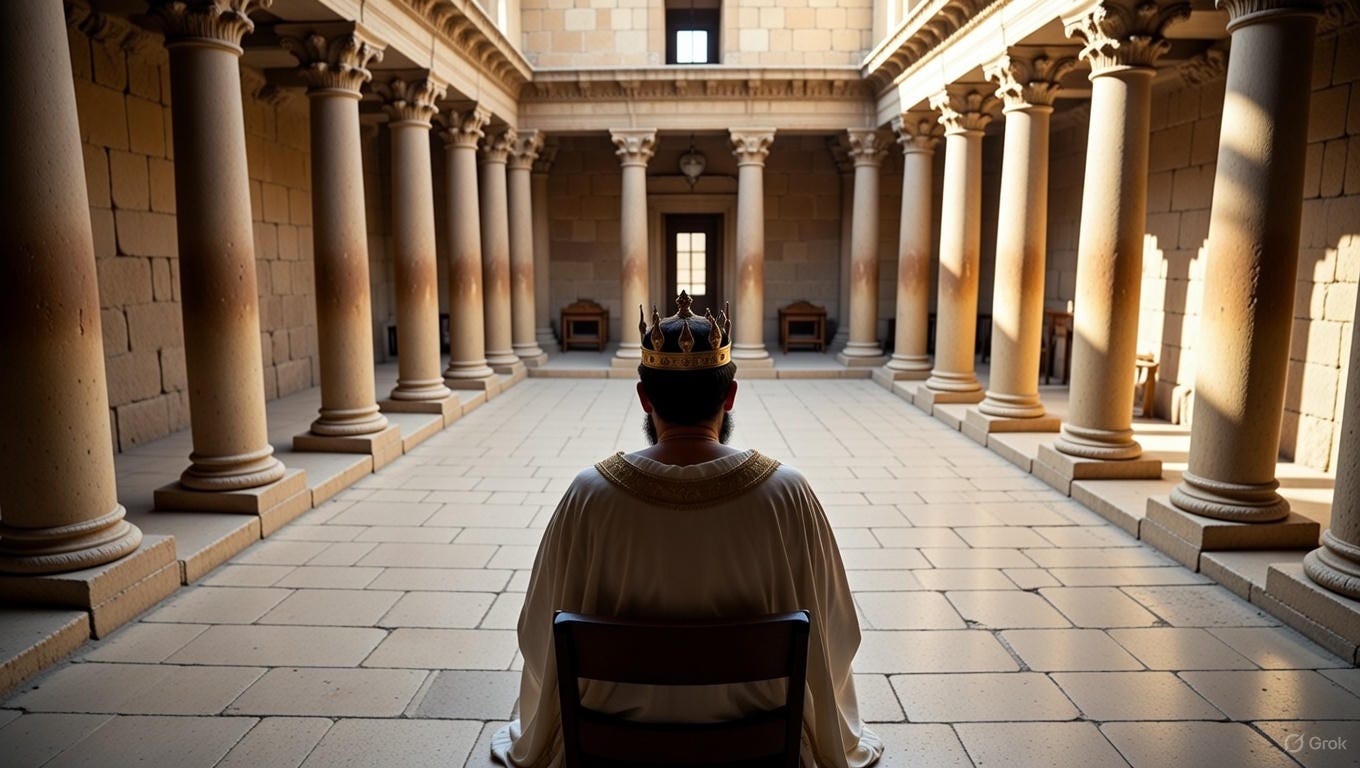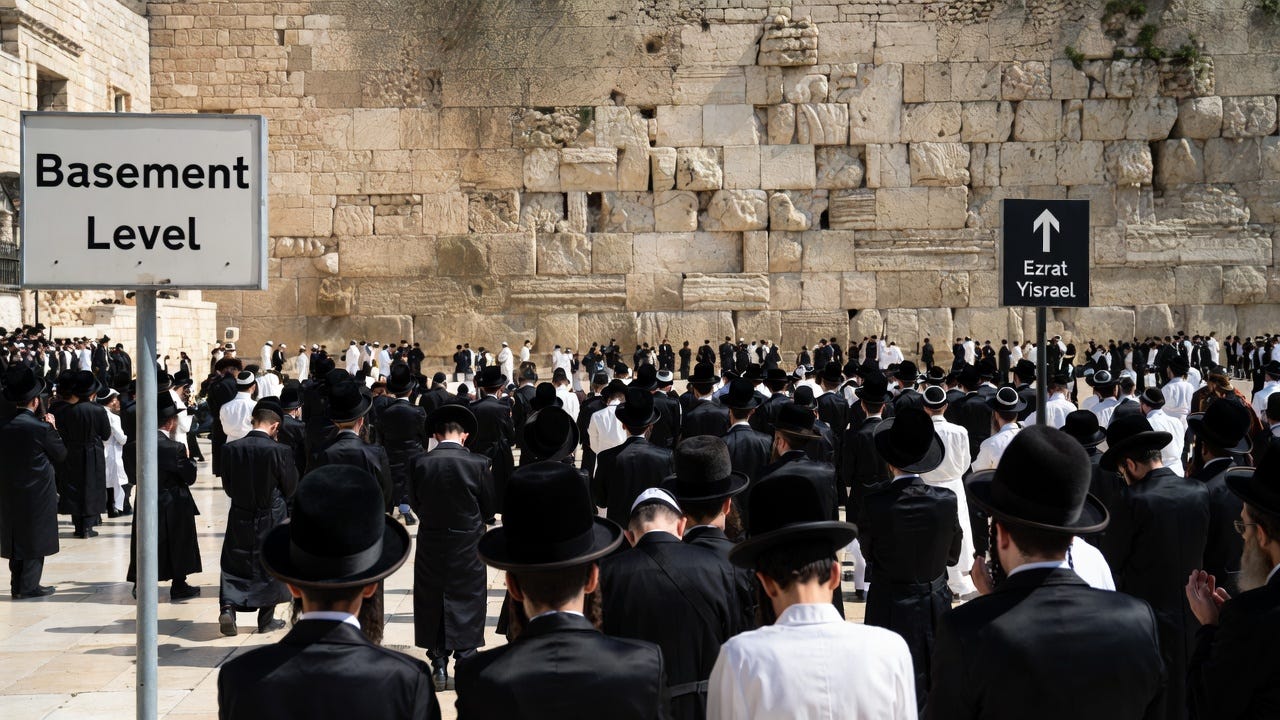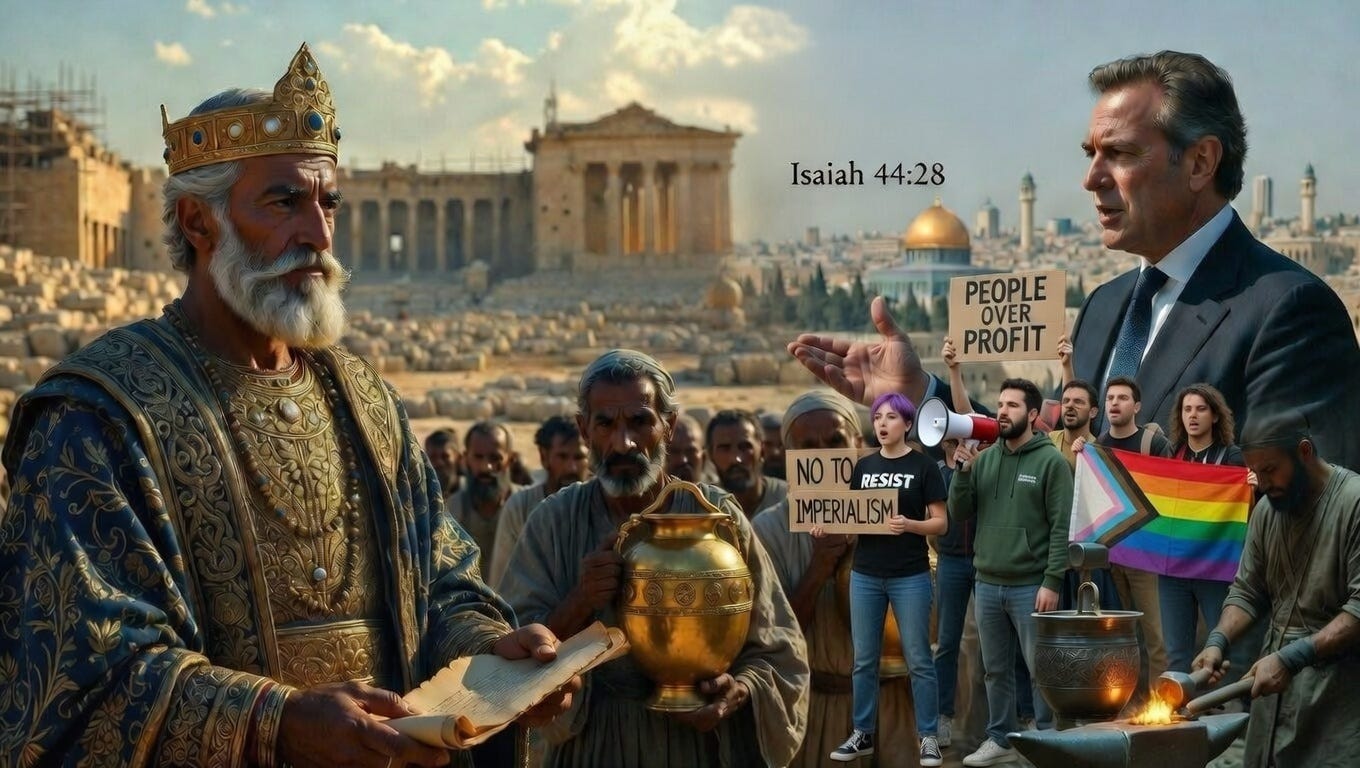
Persian gold flowed into Jerusalem more than 2,500 years ago, not as plunder but as deliberate investment. Cyrus the Great, the wealthiest and most powerful ruler of his era, issued a decree that sent Jewish exiles back to their capital, returned the sacred vessels Nebuchadnezzar had looted from the First Temple, and ordered funds from royal treasuries to pay for rebuilding the house of God. The project succeeded because one man controlled vast resources and chose to direct them toward Jewish restoration. Today, voices on the left attack concentrated wealth with progressive taxation, wealth caps, and redistribution schemes that would make another Cyrus impossible. They frame billionaires as threats to equality, yet history shows that massive private fortunes have repeatedly advanced Jerusalem’s destiny.
Why does opposition to the rich block the very mechanism God used to rebuild Jerusalem in the past?
God’s Named Instrument
The Bible records the answer plainly. Isaiah, speaking more than a century before Cyrus was born, named him directly as the instrument of divine will. “Who says of Cyrus, ‘He is My shepherd; he shall fulfill all My purpose’; saying of Jerusalem, ‘She shall be built,’ and of the temple, ‘Your foundation shall be laid.’” (Isaiah 44:28) The verse leaves no ambiguity. God appointed a non-Jewish king, loaded with imperial wealth, to shepherd the Jewish people back to their land and to oversee the physical reconstruction of the Temple.
Funding That Built the Second Temple
Cyrus did not merely permit the return; he funded it. Ezra 1 details the decree: the king commanded that expenses be paid from the royal treasury, and the gold and silver vessels, 5,400 in total, be handed back to the Jews for transport to Jerusalem. The Sages note that this act fulfilled the prophetic word exactly, turning a foreign monarch into a partner in redemption. The Second Temple rose because wealth was not stripped from its owner or redirected by committee. Cyrus exercised full authority over his riches and aligned them with the Jewish mission. Opposition came from local governors who wrote letters accusing the Jews of rebellion, yet the Persian crown upheld the decree under Cyrus and later Darius. The project finished in 516 BCE because the money kept coming and the political backing held firm. Without that concentrated financial power, the altar would not have been rebuilt first, the foundation would not have been laid, and the daily offerings would not have resumed.
Scattered Efforts Await Unified Direction
Experts in every specialized field already labor independently across Jerusalem and beyond: stone cutters prepare stones cut without iron tools to meet halakhic requirements, weavers craft the multicolored priestly garments using techelet, argaman, and tola’at shani threads, bakers perfect the showbread recipe and its baking implements, incense makers compound the sacred ketoret according to the precise biblical formula, door carvers replicate ancient architectural elements, and kohanim train rigorously in the laws of service alongside Levites rehearsing Temple songs. These scattered initiatives await unification under a central authority like the Nascent Sanhedrin, which has appointed candidates for high priest, issued rulings on the Temple’s precise location on the Mount, and addressed other halakhic questions tied to reinstating the service. Proper funding from billionaires would gather them all—providing dedicated facilities, bulk sourcing of rare materials such as the red heifers already under care by groups like Boneh Israel, and full coordination—so preparations move from isolated workshops to a directed national effort. Just as Cyrus channeled imperial wealth to support Zerubbabel, Joshua the high priest, and the returning exiles in unified rebuilding, today’s affluent supporters could empower this convergence, turning fragmented readiness into comprehensive infrastructure for the Beit HaMikdash HaShlishi.
Barriers to Modern Cyruses
Groups preparing for the Third Temple rely on private donations to advance these pieces. The Temple Institute stands as the most public face, crafting vessels and educating on Temple service. The Temple Mount and Land of Israel Faithful Movement has prepared symbolic cornerstones and presses for rebuilding rights on the Mount. Boneh Israel sources and maintains red heifers critical for purification. Return to the Mount pushes for Jewish prayer access. Yet leftist platforms consistently push policies that erode the ability of wealthy people to amass and deploy capital at will. Progressive tax rates climb higher on high earners, inheritance taxes target generational wealth, and calls for global wealth taxes aim to redistribute fortunes before they can fund anything as ambitious as Temple restoration. The argument is always the same: no one should have “too much” while others have less. That logic would have left Cyrus’s treasuries depleted by bureaucrats long before any decree reached Jerusalem.
The Bible presents wealth in the hands of a righteous supporter as a tool of providence. Cyrus became God’s anointed not despite his riches but because of them; his power enabled action that no impoverished exile could achieve. Modern equivalents exist among pro-Israel philanthropists and Christian Zionists who give generously to Israel and Temple-related causes. Their freedom to do so depends on economic systems that reward wealth creation rather than punish it. When leftist frameworks gain ground, those systems weaken, and the pipeline for Cyrus-like support narrows.
Jerusalem’s history proves the pattern. Empires that tried to erase the Jewish connection collapsed. The ones that aided it, even unintentionally, left their mark on the stones still standing today. The Third Temple will rise when the resources align with the will already declared in Scripture. Those resources come from individuals who control serious wealth and choose to invest it in the Jewish future. Attempts to hamstring that wealth do not halt destiny; they only delay the inevitable. The same God who named Cyrus by name long before his birth still directs history. Wealth aligned with Jerusalem’s purpose has always prevailed, and it will again.
Subscribe for more If this piece resonated with you, join me on Substack at mishnahwalk.substack.com for regular articles that connect Jewish sources to the defense of Israel and the unfolding of biblical promises.