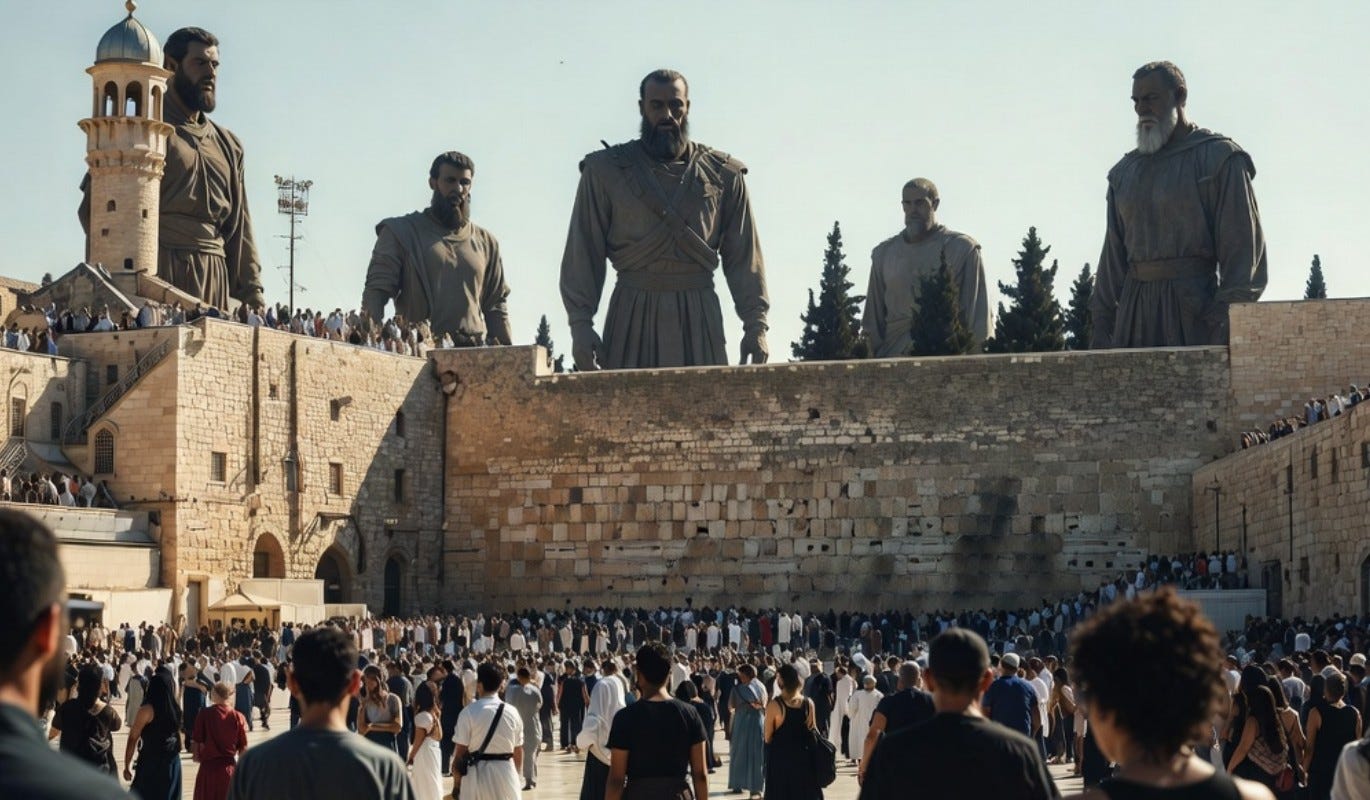
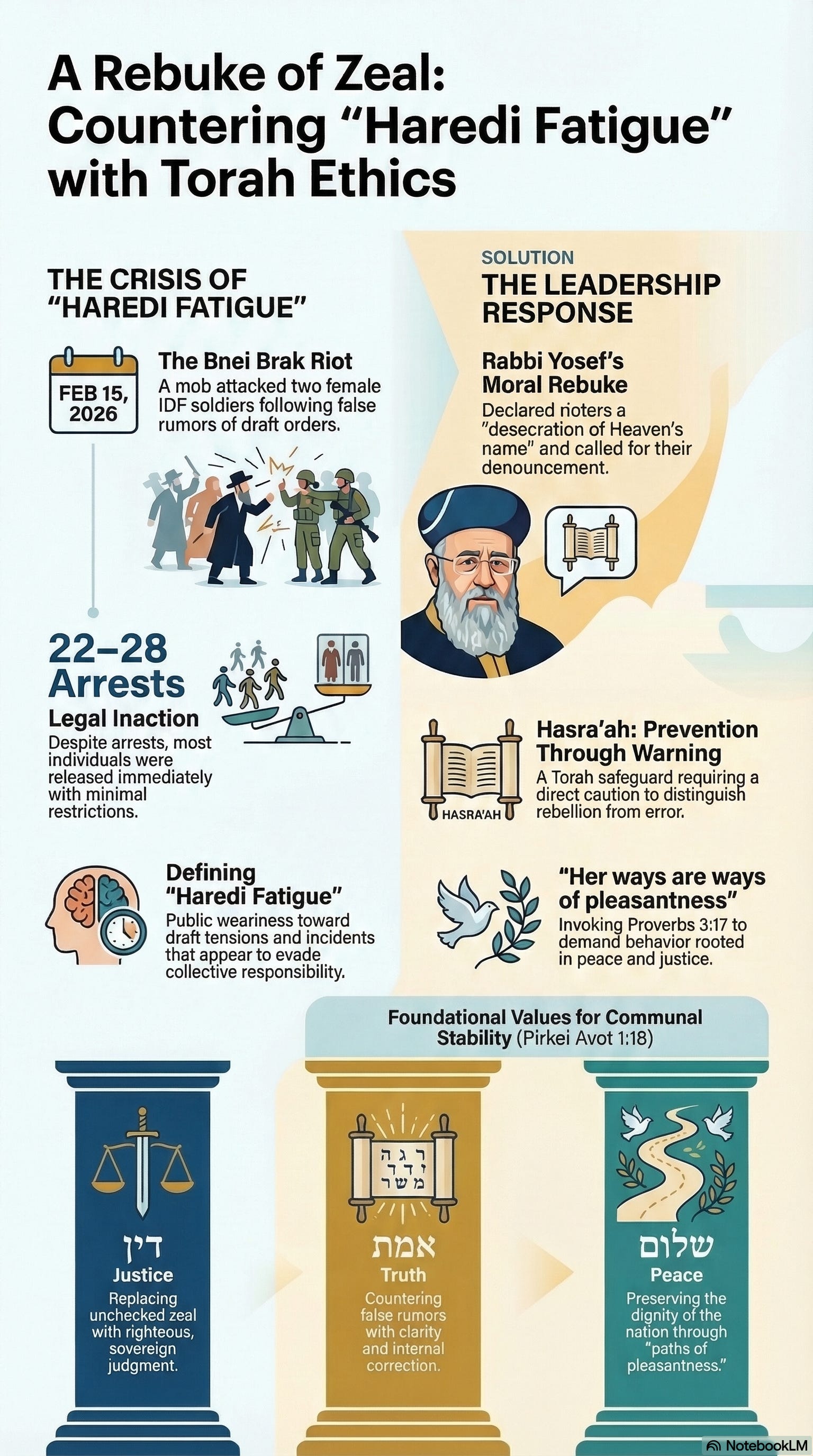
Chaos broke out in Bnei Brak on February 15, 2026. Hundreds of Haredi men chased two female IDF soldiers through narrow streets after a false rumor claimed the soldiers arrived to deliver draft orders. The rumor originated from the Jerusalem Faction’s hotline. In truth, the soldiers, squad commanders from the Education and Youth Corps, conducted a routine home visit to an ultra-Orthodox draftee. Police arrived swiftly and extracted the soldiers without injury to them. The mob overturned a patrol car and set an officer’s motorcycle ablaze. Three officers sustained minor head wounds. Authorities arrested between 22 and 28 individuals. By the following day, courts released all of them, with only a handful placed under brief conditional restrictions.
What separates genuine Torah leadership from silence in the face of such disorder?
Rabbi Yosef Delivers the Needed Rebuke
Former Sephardic Chief Rabbi Yitzhak Yosef refused to let the incident pass without strong words. He declared the rioters had no place in the community. He called their actions a desecration of Heaven’s name and insisted they must be denounced and cast out. He rooted his condemnation in clear Bible language: Her ways are ways of pleasantness, and all her paths are peace (Proverbs 3:17). This public statement stands as a model of courageous leadership. It deserves applause from every corner that values Israel’s unity and moral clarity. Rabbi Yosef chose mishpat (righteous judgment) over expediency. His stand prevented the moment from becoming a deeper wound to the nation’s soul.
Hasra’ah: Torah’s Built-In Mercy and Prevention
The Sages established hasra’ah (warning) as a fundamental safeguard in the Mishnah. In cases carrying serious penalties, witnesses must issue a direct, immediate caution that names the prohibition and its consequence (Sanhedrin 7:1; Makkot 6:1-2). This rule distinguishes deliberate rebellion from unwitting error. It reflects divine compassion that seeks to spare the offender through knowledge rather than surprise. Rabbi Yosef issued a communal form of hasra’ah through his rebuke. He warned the entire Haredi world that mob violence against fellow Jews defending the Land violates the Bible’s core demands. The principle reminds everyone that justice begins with clarity. Prevention through warning saves lives, preserves shalom (peace), and upholds the dignity of Am Yisrael.
The Quiet Buildup of “Haredi Fatigue”
Observers in Israel and abroad have begun to register growing unease over repeated patterns. Draft tensions, street confrontations, and perceived exemptions from shared burdens create what some now describe as “Haredi Fatigue.” The term appears in quotes because it captures an emerging weariness among supporters of Israel who desire unity but tire of incidents that seem to evade collective responsibility. Rabbi Yosef moved to stop this fatigue before it solidifies. His positive push heads off resentment and instead invites return to higher standards. By framing the violence as contrary to pleasantness and peace, he protected the community’s honor. He showed the world that internal Torah correction remains possible and powerful.
Silence from Other Leaders Weakens the Whole
Many other Haredi voices stayed quiet or contributed to an environment that tolerates such outbursts. That inaction embarrasses the broader community. It undermines moral authority at a time when Israel needs every segment aligned. True leadership demands consistent application of Bible ethics. Selective condemnation after the fact falls short. Rabbi Yosef modeled the courage others must now follow. His example calls every leader to draw firm boundaries rooted in the basics every child learns in cheder.
People immersed daily in Bible study should grasp these truths without hesitation. The Sages teach in Pirkei Avot (1:18) that the world endures on din (justice), emet (truth), and shalom (peace). Mob actions that endanger soldiers contradict the command to seek justice and relieve the oppressed (Isaiah 1:17). These fundamentals require no advanced commentary. When behavior departs from them, honest reflection and immediate correction become essential.
A restored Sanhedrin would apply the same careful hasra’ah and procedural wisdom the Mishnah outlines. Such an institution demands consensus forged among Jews living in the Land of Israel. Those who seek influence in national mishpat must dwell here and engage fully in the life of the nation. Exile carries its own weight in prayer and learning, but sovereign justice belongs to those on the biblical soil.
Rabbi Yosef revealed the beauty of Bible justice when practiced with integrity. It warns before it punishes. It aims for restoration over division. His stand against emerging “Haredi Fatigue” serves as a turning point for greater unity. Geula (redemption) draws closer when leaders demand adherence to the paths of pleasantness. Israel rises stronger when mishpat prevails over unchecked zeal, when mercy guides accountability, and when every Jew returns to the clear commands of the Bible. Let this rebuke inspire the caution, the follow-through, and the renewal the Sages always intended.